

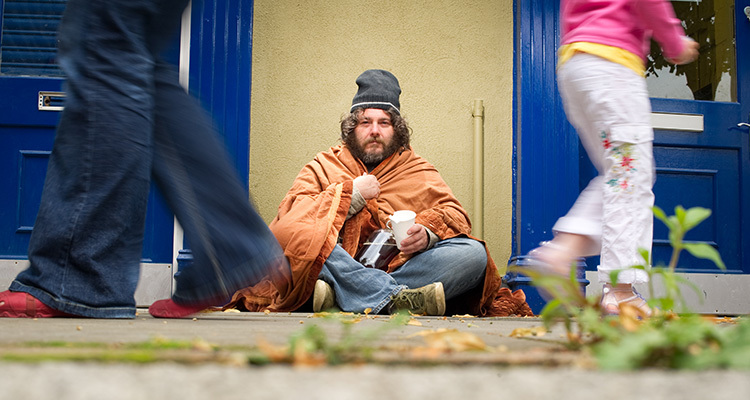
Understanding the causes of homelessness is essential for social workers, healthcare providers and community advocates who work with vulnerable populations. Students in Campbellsville University’s online Bachelor of Social Work (BSW) program and online Master of Social Work (MSW) program develop skills in community practice, social policy and advocacy that apply directly to addressing housing instability and its root causes.
Homelessness in America reached a record high in 2024. According to the 2024 Annual Homelessness Assessment Report (AHAR), published by the U.S. Department of Housing and Urban Development (HUD), more than 770,000 people were experiencing homelessness on a single night in January 2024. This represents an 18% increase from 2023 and the highest count since the federal government began tracking the data.
Understanding what causes homelessness matters, not just for policy and advocacy, but for the social workers, healthcare providers, educators and community members who work with unhoused individuals every day. Homelessness is not a single-cause problem. It arises from the intersection of structural, economic, health and personal factors that, together, push vulnerable people out of stable housing. The following guide explains the main causes of homelessness in the United States and outlines what social workers and communities can do to address them.
Homelessness in America: A Snapshot
Before examining causes, it’s worth understanding who experiences homelessness and how it’s measured. The annual Point-in-Time (PIT) component of HUD’s AHAR is conducted each January and counts sheltered and unsheltered individuals on a single night. Here are more specific findings from the 2024 count:
- 771,480 people experiencing homelessness on a single night in January 2024, the highest count since data collection began
- An 18% increase from 2023, driven largely by a 25% rise in the sheltered population
- Family homelessness rose 39% from 2023 to 2024, the largest single-year increase of any group
- Veteran homelessness declined 7.6%, continuing a 55% reduction since 2009
- Unaccompanied youth homelessness increased 10% from 2023 to 2024
Experts caution that PIT counts undercount the true scale of homelessness, as many people living with family or friends, staying in motels or cycling through unstable housing, are not counted. The actual number of people who experience homelessness over the course of a year is substantially higher.
Main Causes of Homelessness
Homelessness in the United States results from the intersection of multiple overlapping factors. The causes below reflect structural failures, economic pressures and personal circumstances that can push vulnerable people out of stable housing.
Lack of affordable housing
The most widely cited structural cause of homelessness is the severe shortage of affordable housing in the United States. According to the National Low Income Housing Coalition (NLIHC), the U.S. has a shortage of 7.2 million rental homes affordable and available to extremely low-income renters, with only 35 such homes available for every 100 households that need them. A single unexpected expense (a car repair, a medical bill, a missed shift) can make the difference between housed and unhoused.
The gap between housing supply and need is significant and worsening. Construction in many urban markets has concentrated on market-rate and luxury units, not affordable housing for low-income renters. Simultaneously, older affordable housing stock has been demolished or converted. The result is a critical shortage of rental units that low-income individuals and families can afford.
Poverty and income inequality
Poverty is both a direct and indirect driver of homelessness. When income is insufficient to cover basic needs, including housing, even a small financial disruption can result in housing loss. The widening gap between wages and the cost of living has left millions of Americans in a precarious position.
The federal minimum wage has not increased since 2009. In most U.S. cities and regions, full-time work at the minimum wage does not cover the cost of a one-bedroom apartment at fair market rent. NLIHC’s annual Out of Reach report consistently shows that there is no state, county or metro area in the United States where a minimum-wage worker can afford a two-bedroom apartment at fair market rent working 40 hours a week.
Unemployment and sudden job loss
Job loss is one of the most common triggers for housing instability. Whether from layoff, business closure, health-related inability to work or economic downturn, losing income can quickly exhaust savings and lead to missed rent or mortgage payments. Workers in low-wage, part-time and informal employment are especially vulnerable, as many lack savings buffers, sick leave or unemployment insurance.
Underemployment, including working fewer hours than needed, at inadequate wages, or in unstable gig employment, keeps many workers in chronic financial fragility even when employed. A shift reduction or a lost gig can tip a household from housed to crisis.
Mental health conditions
Mental illness is a significant factor in homelessness for a substantial portion of the unhoused population. According to KFF, roughly 22% of people experiencing homelessness in 2024 had a serious mental illness, a rate more than four times higher than in the general adult population. Conditions such as schizophrenia, bipolar disorder or major depression can impair a person’s ability to maintain stable housing, hold employment or navigate social services without adequate support.
It is important to note the direction of the relationship: Mental illness is rarely the primary cause of homelessness. Rather, it intersects with housing unaffordability and poverty. People with serious mental illness face higher rates of unemployment, discrimination in housing and loss of social support networks, all of which increase vulnerability to housing instability. Without adequate mental health services, community housing support and crisis intervention, individuals with serious mental illness are at significantly elevated risk of losing housing and struggling to regain it.
Substance use disorders
Substance use disorders, including alcohol use disorder, opioid use disorder and other drug dependencies, are both a cause and a consequence of homelessness. Active substance use can lead to job loss, family breakdown, financial depletion and the inability to maintain housing. Homelessness itself, in turn, increases exposure to substances and makes recovery far more difficult.
The opioid epidemic has significantly affected the demographic profile of homelessness in many regions. Communities that previously had relatively low rates of unsheltered homelessness have seen sharp increases as addiction spreads into rural and suburban areas.
Effective responses, including Housing First models, medication-assisted treatment (MAT) and integrated supportive housing, have shown strong evidence of helping individuals with substance use disorders achieve housing stability. Social workers trained in theory-based approaches that incorporate motivational interviewing and harm reduction play a central role in connecting individuals to these evidence-based pathways.
Domestic violence
Domestic violence and intimate partner violence are among the leading causes of homelessness for women and children. Survivors fleeing abuse often leave with no prior planning, no access to financial resources and no place to go. Emergency shelter capacity frequently falls short of demand, and transitional housing options for families escaping violence are chronically underfunded.
The National Domestic Violence Hotline estimates that domestic violence affects millions of Americans each year, and housing instability is one of the most common barriers to survivors being able to safely leave abusive situations. Social workers in homeless shelters, domestic violence programs and housing agencies play a critical role in helping survivors find safety and stability.
Medical debt and health crises
A serious illness, injury or medical diagnosis can rapidly deplete savings, interrupt employment and result in debt that makes housing unaffordable. Medical bankruptcy is far more common in the United States than in countries with comparable economies. The convergence of health crisis, job loss and medical bills creates a particularly difficult trap for uninsured and underinsured individuals.
A health crisis can tip a vulnerable household into housing loss even when rent has been paid on time for years. The Centers for Disease Control and Prevention (CDC) recognizes that social determinants of health, including housing, income, neighborhood and food security, are deeply intertwined, and homelessness itself creates serious health consequences that make recovery harder.
Systemic racism and discrimination
Homelessness is not evenly distributed across racial groups. Black Americans, who represent about 13% of the U.S. population, account for roughly 30% of people experiencing homelessness, according to KFF’s analysis of 2024 federal data. This profound racial disparity is rooted in historical and ongoing structural inequalities. Indigenous and multiracial Americans are also disproportionately represented in homelessness data.
These disparities reflect decades of discriminatory housing policies (redlining, exclusionary zoning and racially restrictive covenants), wealth gaps resulting from unequal access to homeownership and asset building, higher rates of poverty driven by wage discrimination and employment barriers, and continued discrimination in rental housing markets. These inequities have compounded over generations, concentrating poverty and housing instability in communities of color.
LGBTQ+ individuals, particularly youth, also face disproportionate rates of homelessness due to family rejection, discrimination in housing and employment, and lack of culturally competent services. The absence of affirming housing resources and support networks leaves many LGBTQ+ individuals with few safe options when housing instability strikes.
Criminal record barriers
A prior criminal record, even for nonviolent offenses or offenses for which someone has served their sentence, creates significant barriers to both housing and employment. Many landlords conduct background checks and reject applicants with criminal histories. Public housing authorities have policies that restrict or bar people with certain convictions. Without stable housing, reentry after incarceration becomes vastly more difficult, leading to high rates of recidivism and cycling between incarceration and homelessness.
Social workers and reentry advocates play a critical role in helping justice-involved individuals navigate housing, benefits and employment barriers in the period immediately following release, when housing instability risk is highest. Programs that combine housing assistance with legal aid and workforce development show strong outcomes for people navigating reentry.
Youth homelessness and aging out of foster care
Young people who age out of the foster care system without a permanent family or stable support network face extremely elevated rates of homelessness. According to youth.gov, 31 to 46% of youth who leave foster care experience homelessness by age 26.
More broadly, LGBTQ+ youth rejected by their families, young adults fleeing abuse and young people without family economic support are overrepresented among the homeless youth population. Youth homelessness carries its own set of risks, including higher rates of victimization, exposure to trafficking, and long-term disruption to education and employment, that require specialized intervention approaches.
Ready to help address homelessness in your community?
Campbellsville University's online BSW and online MSW programs build the case management, crisis intervention and advocacy skills social workers use to help individuals and families find stable, lasting housing.
View ProgramWhat Social Workers Do to Address Homelessness
Social workers are on the front lines of homelessness response in every community. They work in emergency shelters, hospitals, schools, government agencies and on housing support outreach teams, connecting unhoused individuals with the services and housing they need to stabilize and recover. Common social work roles in addressing homelessness include the following:
- Street outreach: Building trust with unsheltered individuals and helping them access shelter, healthcare and housing services
- Case management: Developing individualized service plans, connecting clients to housing programs, mental health treatment, substance use services, benefits enrollment and employment support
- Housing navigation: Helping clients identify and secure available housing, negotiate with landlords and access rental assistance programs
- Shelter services: Operating and staffing emergency shelters, transitional housing programs and safe havens
- Policy and advocacy: Researching homelessness data, advocating for affordable housing policy and working to address systemic causes at the community and legislative level
For social workers interested in this field, both BSW-level entry positions and MSW-level clinical and administrative roles are available across the homelessness services sector. Students in Campbellsville University’s online BSW and online MSW programs gain the skills and field experience needed to step directly into these roles.
Understanding the Causes of Homelessness and the Social Workers Who Address Them
Homelessness in America is not the result of personal failure. It is the predictable outcome of systems that have not provided enough affordable housing, adequate income supports or accessible mental health care. For most people who experience homelessness, multiple causes converge at once, making recovery difficult without coordinated support.
Social workers sit at the intersection of these systems, doing the direct practice, case management and policy advocacy work that helps individuals and families regain stable housing. Addressing homelessness at scale requires both frontline intervention and the structural changes that only sustained advocacy can produce.
Explore Campbellsville University’s online Bachelor of Social Work (BSW) and online Master of Social Work (MSW) and take the next step toward a career in social work.
Frequently Asked Questions
Homelessness is a complex issue shaped by economic, social and systemic forces, and it raises a lot of questions. Here are answers to some of the most common ones.
What are the main causes of homelessness in America?
The leading causes of homelessness include lack of affordable housing, poverty, unemployment, mental health conditions, substance use disorders, domestic violence, medical debt and criminal record barriers. The shortage of affordable housing combined with stagnant wages is the primary structural driver, and most people who experience homelessness face several of these factors at once rather than a single cause.
How many people are homeless in America?
More than 770,000 people were experiencing homelessness on a single night in January 2024, according to HUD. The actual number is likely higher, as the count excludes people who are couch-surfing, doubled up or in other unstable arrangements.
Is mental illness the main cause of homelessness?
No. Mental illness is a significant contributing factor, but the primary drivers are structural, particularly the shortage of affordable housing. Most people with serious mental illness do not experience homelessness.
What causes youth homelessness?
Youth homelessness is commonly caused by family rejection, abuse or neglect at home, and aging out of foster care without stable support. LGBTQ+ youth disproportionately represented among the homeless youth population, primarily due to family rejection following coming out.
About Campbellsville University
Campbellsville University is a Christian university in Campbellsville, Kentucky, with a history of preparing students for service-oriented careers since 1906. Grounded in a mission of faith, learning and community engagement, the university offers more than 80 areas of study across undergraduate and graduate programs.
Its online programs extend that mission to working adults nationwide, providing rigorous, accredited education with the flexibility to balance professional and personal commitments. Field placements are coordinated in students’ local communities, connecting academic preparation to real-world practice close to home.